
After a period of capital outflows, investors are returning to gold again.
In a week, world ETFs with physical gold attracted about$3.5 billion, which was the maximum weekly inflow since February 2026. This is alreadysixth consecutive week of positive flow.
Over the past six weeks, the funds have accumulated about$10 billionand aggregate inventories have reached approximately4,114 tonnes.
This is an important signal for the market: institutional demand for gold is accelerating again.
Europe has become the main buyer
The bulk of new money came from Europe.
European funds accounted for about$2.3 billion, North America attracted another $1.1 billion and approximately $200 million from Asia.
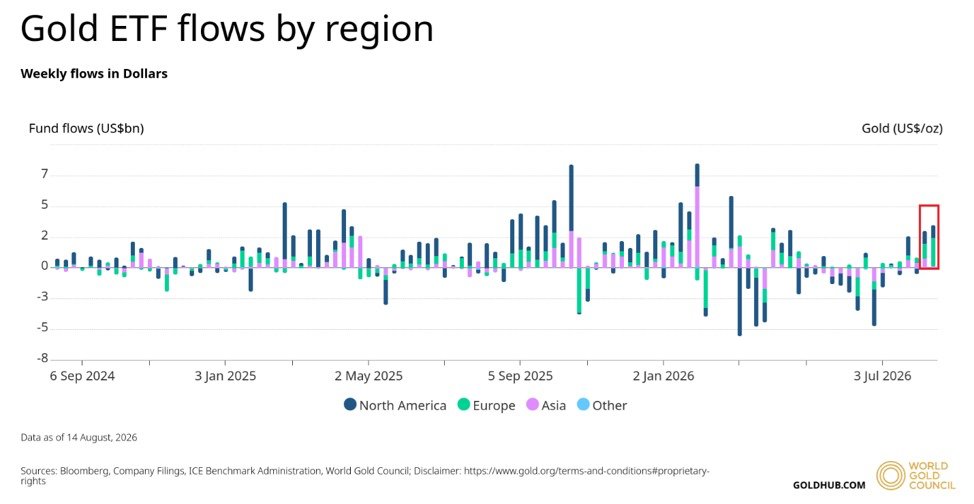
Weekly flows into gold ETFs by region. A sharp reversal of inflows is observed in August 2026. Source: World Gold Council, Bloomberg, data as of August 14, 2026.
Why does money return to gold?
Gold has several sources of support at the same time.
Firstly, markets are revising expectations for the Fed after softer data on the US economy. Reduced rate hike expectations typically reduce pressure on gold.
Secondly, demand from central banks continues. In the second quarter they acquired289 tons of gold, which was a record figure for the second quarter.
Third, geopolitical uncertainty increases the attractiveness of defensive assets.
The fun begins after six weeks
One weekly inflow can be attributed to a technical rebound.
Butsix weeks in a rowlook different now.
This could mean that large investors are gradually regaining their positions after the spring selling period.
It is important to distinguish between the price of gold and physical demand.
A rise in quotes in itself does not mean a massive influx of capital. ETFs allow you to see exactly the change in investment demand, and the World Gold Council separately tracks both cash flows and changes in the physical holdings of funds.
Main conclusion
The gold market is receiving support from several sides at once: ETFs are again attracting capital, central banks continue to buy metal, and expectations for Fed rates are becoming softer.
The big question now is whether the current influx will translate into a sustainable new cycle of institutional demand.
If so, gold will have a strong fundamental source of support even as volatility remains high.